Jump to a section
The smallest broken part can bring an RV trip to a stop.
A fresh-water hose will not seal because its washer disappeared. A cabinet screw backs out. A drawer latch breaks. A hitch pin clip goes missing in the gravel. None of those problems calls for a rolling shop cabinet—but they can still send the entire family on a long drive to the nearest store.
Our goal is simpler: keep one compact toolbox that can help us diagnose a problem, tighten something loose, replace a small known part, stop a minor leak, or hold a nonstructural item safely until we get home.
This is not a box for rebuilding the camper beside the picnic table. It is the box that keeps a small problem from becoming the whole trip.
Start with the jobs—not the tool aisle
It is easy to fill a toolbox with tools that look useful and still miss the one washer that would have saved the weekend.
We build the kit around the problems we may reasonably handle at a campsite:
- a loose cabinet hinge, handle, vent trim, or nonstructural fastener;
- a fresh-water connection that drips because a washer is damaged or missing;
- a hose clamp or light-duty fitting that needs attention;
- a blown fuse after the cause has been identified and corrected;
- a loose battery-terminal connection handled according to the equipment instructions;
- a missing manufacturer-specified clip, pin, or small hitch accessory for which we carry the exact replacement;
- a drawer, cabinet door, or loose piece of trim that needs a temporary travel-safe repair; and
- a quick level, length, tire-pressure, or basic electrical check.
If the problem involves propane, brakes, suspension, tires, high-current wiring, shore power, a structural component, or an unknown towing-system fault, the small toolbox is not permission to improvise. We stop, make the area safe, consult the correct manual, and get qualified help.
The core tools
Compact cordless drill/driver
A small cordless drill/driver saves time on repeated screws and light-duty repairs. We carry:
- one charged battery;
- the matching charger when the trip length justifies it;
- a compact bit holder or extension; and
- a bit set chosen after checking the actual fasteners in our RV.
RV fasteners are not all Phillips-head screws. A useful kit may include Phillips, slotted, square/Robertson, Torx, and hex bits, but the right set is the one that matches the camper and accessories we actually own.
We start with low torque. RV trim, thin panels, plastic fixtures, and soft fasteners are easy to strip. Final tightening is often better done by hand.
Manual multi-bit screwdriver
The drill is convenient; the manual screwdriver is essential. It provides better control around plastic, electrical covers, tight spaces, and small fasteners. A ratcheting handle with interchangeable bits keeps the footprint small.
Compact socket and wrench set
A compact SAE and metric socket set covers many common nuts and bolts. Add a small combination-wrench set or one quality adjustable wrench for places where a socket will not fit.
Before the first trip, walk around the camper, hitch accessories, battery compartment, and interior hardware. Note the sizes that appear repeatedly and confirm that the kit reaches them. That short inspection is more useful than carrying a large set with the wrong sizes.
Pliers
Three compact choices cover different jobs:
- needle-nose pliers for clips, small connectors, and tight spaces;
- slip-joint or tongue-and-groove pliers for light gripping and plumbing fittings; and
- locking pliers for controlled temporary holding—not as a substitute for the correct wrench or a permanent repair.
A compact level
A torpedo level helps when setting the camper, checking a refrigerator or countertop surface when the equipment requires it, and handling small repair jobs. It confirms level; it does not replace proper wheel chocks, leveling blocks, stabilizing equipment, or the instructions for the RV.
The quiet problem-solvers
These small tools earn their space:
- tape measure;
- utility knife with protected spare blades;
- LED headlamp or flashlight;
- permanent marker and pencil;
- tire-pressure gauge suitable for the pressure range of the tow vehicle and trailer; and
- work gloves and safety glasses.
A multimeter or 12-volt test light can be helpful only when the user understands the system, the test procedure, and the tool. We de-energize equipment when instructed, never probe an unknown circuit casually, and leave shore-power and high-current faults to someone qualified.
The tiny spares that can save a trip
The most valuable part of this box may be the divided organizer in the top tray.
Water-connection spares
We keep:
- fresh-water hose washers or O-rings that match our actual hose and fittings;
- a spare cap or plug for the connections our setup uses;
- a few correctly sized hose clamps; and
- a short piece of self-fusing silicone repair tape for an appropriate temporary repair.
A missing hose washer can make a perfectly good connection leak no matter how hard it is tightened. We replace the washer instead of applying more force to a plastic fitting.
Thread-seal tape belongs only on fittings designed to use it. It is not a universal cure for every hose, flare, compression, or gasketed connection.
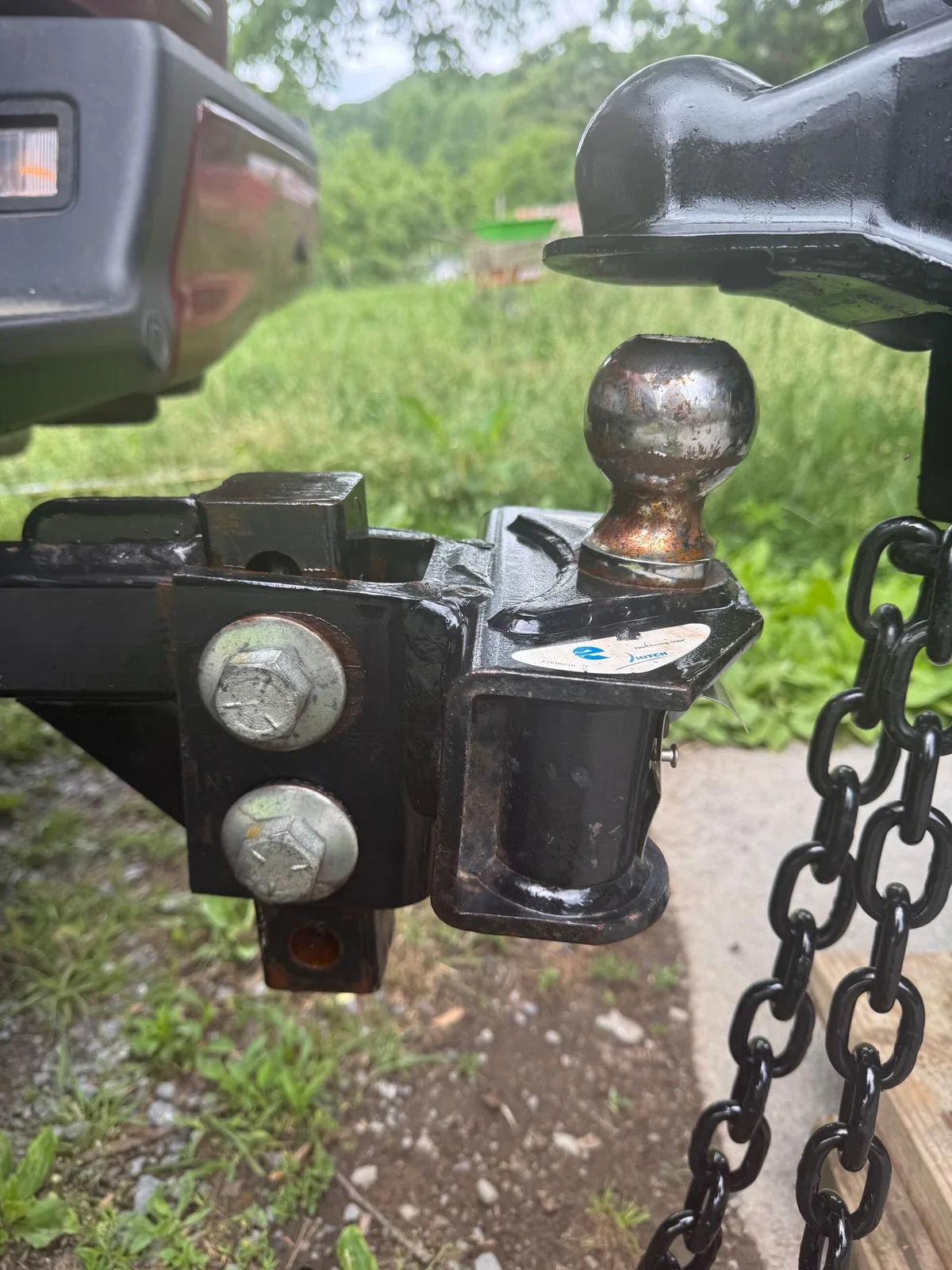
Exact hitch and coupler spares
This bag gets a bright label because its contents are not interchangeable with random hardware.
Depending on the towing setup, it may include:
- the exact rated receiver hitch pin and its specified retention clip;
- the exact coupler-latch pin or lock required by the coupler manufacturer;
- the correct clips or pins specified for weight-distribution or sway-control equipment; and
- manufacturer-specific tools and spare parts for a specialty hitch.
If the rig uses a Hensley Arrow, Cub, or another specialty hitch, we use the documentation and parts for the exact model and generation. Hensley states that some Original and Ultimate parts are not compatible, and it sells model-specific spare parts and an over-center-latch wrench. We would rather order the correct spare before the trip than discover beside the road that a similar-looking part does not fit.
We never replace a towing, coupler, suspension, or load-bearing pin with a hardware-store bolt, nail, screwdriver, or unverified clip.
Electrical spares
We carry only fuses of the exact types and amperage ratings used by our installed equipment. A fuse that opens is telling us something. We identify and correct the cause before replacing it, and we never install a higher-amperage fuse to keep it from opening again.
A few correct wire connectors and a compact wire stripper/crimper can be useful for someone who knows the applicable 12-volt repair. An unknown electrical problem, damaged shore-power cord, hot connection, burning smell, or repeated fuse failure is a stop-and-get-help problem.
Everyday fasteners and catches
For nonstructural interior repairs, a small divided assortment may include:
- screws that match common cabinet and trim hardware already in the RV;
- small nuts, bolts, flat washers, and locknuts;
- spare cabinet catches or drawer latches used in the camper;
- a few small cotter pins only for ordinary applications that specifically call for them; and
- zip ties and reusable hook-and-loop straps.
We do not drive a longer screw into an RV wall without knowing what is behind it. Wiring, plumbing, thin panels, and exterior skin can be much closer than expected.
Adhesives and temporary-repair supplies
A little goes a long way:
- duct tape for temporary noncritical securing and patching;
- electrical tape for its intended electrical-insulation uses;
- self-fusing silicone tape for compatible hose or cable repairs;
- removable painter’s tape for labels and gentle temporary holding;
- cyanoacrylate “super glue” for small compatible materials;
- a small two-part epoxy or epoxy putty for appropriate nonstructural repairs; and
- a few shop towels and disposable gloves.
Heat, sunlight, vibration, moisture, pressure, and material compatibility all affect a repair. Adhesive is not a substitute for a rated fastener, plumbing component, electrical connector, roof-seal procedure, or structural repair.
We also keep liquids sealed inside a zip bag. A tube of glue that empties itself into the toolbox creates a second repair job.
How we keep it inside one box
The trick is not buying a larger toolbox. It is giving every item a job and a home.
We use four simple groups:
- Core tools: drill/driver, manual screwdriver, bits, sockets, wrenches, pliers, level, light, gauge, knife, and measuring tools.
- Water: washers, O-rings, caps, clamps, and approved temporary-repair material.
- Exact towing parts: hitch and coupler pins, clips, specialty-hitch parts, and any required dedicated wrench.
- Small repairs: fuses, known fasteners, latches, ties, tapes, and adhesives.
Small parts go into divided compartments or clear labeled bags. The exact towing parts stay in a brightly marked pouch so nobody mistakes them for general hardware.
We tape an inventory card inside the lid. When we use a washer, fuse, clip, adhesive, or last fastener, it goes on the restock list immediately—not six months later when we are already at the next campground.
Our compact RV toolbox checklist
Tools
- Compact cordless drill/driver and charged battery
- Compact bit set matched to the RV
- Manual multi-bit screwdriver
- SAE and metric sockets with compact ratchet
- Small combination-wrench set or adjustable wrench
- Needle-nose pliers
- Slip-joint or tongue-and-groove pliers
- Locking pliers
- Torpedo level
- Tape measure
- Utility knife
- LED headlamp or flashlight
- Tire-pressure gauge
- Marker and pencil
- Work gloves and safety glasses
- Multimeter or 12-volt test light, only if trained to use it
Small spares
- Correct fresh-water hose washers or O-rings
- Matching water caps, plugs, and hose clamps
- Exact rated receiver hitch pin and retention device
- Exact coupler-latch pin or lock
- Model-specific hitch clips, pins, parts, or wrench
- Correct fuse types and amperages
- Known cabinet screws, nuts, bolts, and washers
- Spare cabinet catches or drawer latches
- Zip ties and reusable straps
Repair supplies
- Duct tape
- Electrical tape
- Self-fusing silicone tape
- Removable painter’s tape
- Small compatible super glue
- Small epoxy or epoxy putty
- Shop towels and disposable gloves
- Clear bags for removed parts and messy supplies
- Inventory and restock card
What lives outside this toolbox
Some essential RV equipment is too large—or too specialized—to pretend it belongs in one small box. Depending on the rig and manuals, a separate equipment area may hold:
- wheel chocks and leveling blocks;
- an inflator or air compressor rated for the needed pressure;
- a torque wrench and the correct socket when the manufacturer calls for owner checks;
- manufacturer-approved jack or lifting equipment;
- a spare potable-water hose;
- electrical protection equipment;
- sewer equipment; and
- roadside emergency gear.
Those items still belong on the trip checklist. They simply do not need to make the compact repair box heavy and hard to use.
The five-minute pre-trip test
Before calling the kit finished, we try it against the actual rig:
- Can the bit set operate the common interior screws without damaging them?
- Do the sockets and wrenches fit the serviceable fasteners we expect to handle?
- Do the water washers fit the hose and accessories?
- Is every hitch and coupler pin, clip, and specialty part an exact replacement for this equipment?
- Are the fuse type and amperage labels readable?
- Is the drill battery charged and the flashlight working?
- Can one adult lift the box easily and find a tiny part at night?
If the answer to the last question is no, the box needs better organization—not another handful of tools.
A small box buys back family time
We do not expect every RV trip to include a repair. We would much rather spend the evening by the fire with Sami and Lily while Happy and Dolly investigate every campground smell.
That is exactly why the toolkit matters. The point is not to turn camping into maintenance. It is to solve the small, predictable problems quickly so the trip can go back to being the trip.
What tiny part has rescued one of your camping weekends—or would have, if it had been in the toolbox? Tell us so we can keep improving this list.
Keep the whole trip ready
The toolbox handles the small surprises. Before moving the camper, use our RV departure walkaround checklist to check the rig itself. When space gets tight, our guide to using a spotter to back a travel trailer gives the driver and spotter one calm system to follow.
Safety note
This guide is a general packing and organization resource, not a repair procedure. Follow the current manuals, ratings, inspection requirements, and service instructions for your exact RV, tow vehicle, hitch, coupler, tires, electrical system, appliances, and accessories. Never improvise safety-critical towing hardware or exceed your training. Stop using damaged equipment and obtain qualified assistance when a problem involves towing integrity, brakes, suspension, tires, propane, shore power, high-current wiring, structural components, or any condition you cannot positively identify and correct.